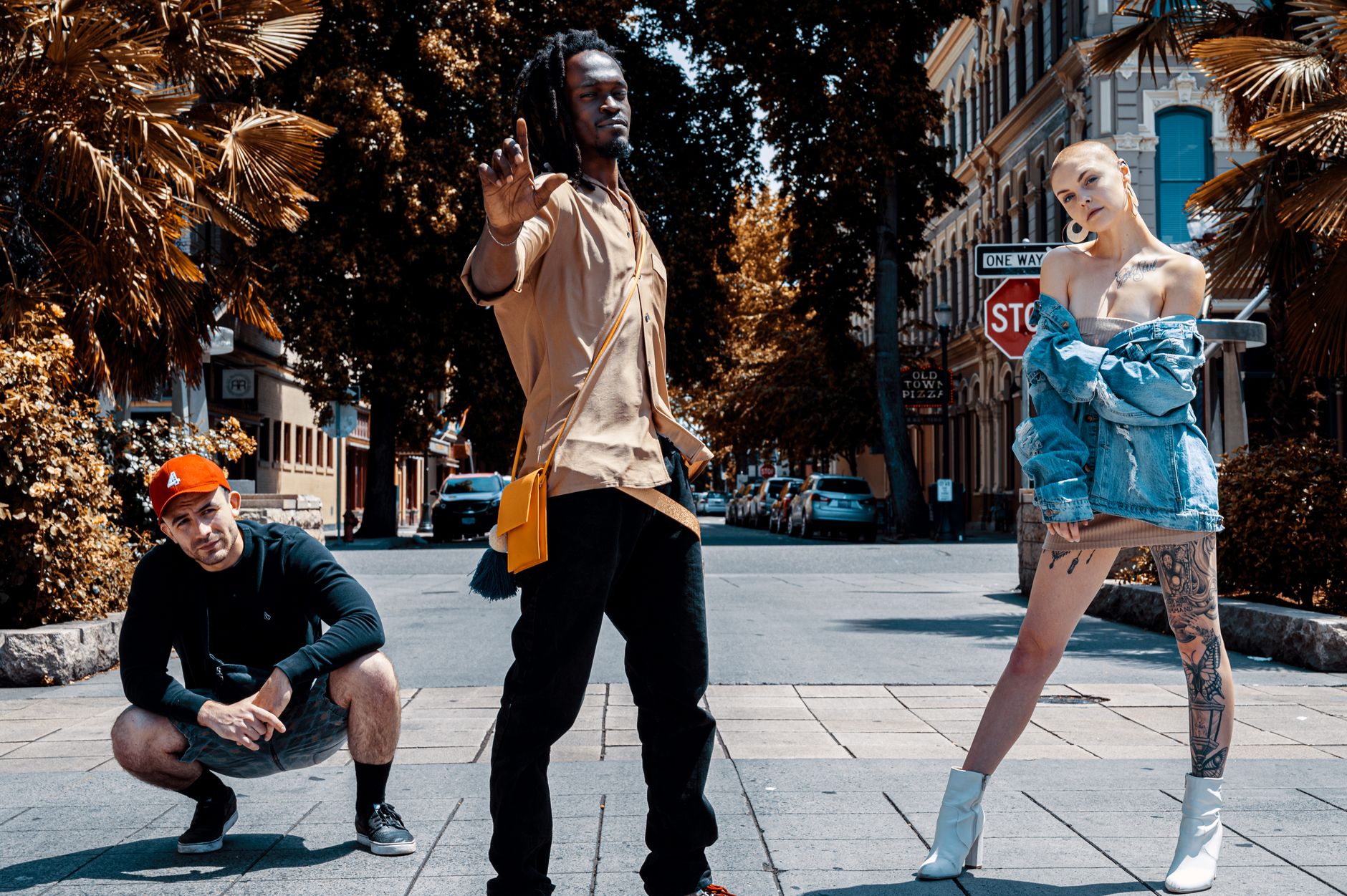
Fashion has always been political. From the suffragettes' sashes to the Black Power salute at the Olympics, clothing has been used as a tool for social change. But in recent years, streetwear has emerged as a particularly potent force in this arena.
Streetwear brands like Supreme and Off-White have built their empires on limited releases and hypebeast culture. They've created an entire economy around scarcity and desire. And while many might dismiss this as mere consumerism, I argue that it's much more than that. It's a reflection of our cultural moment - one defined by anxiety, uncertainty, and a desperate search for meaning.
This isn't just about buying the latest drop or waiting in line outside a store at dawn. It's about identity, community, and belonging. When you wear a Supreme box logo tee, you're not just wearing a piece of clothing - you're wearing a badge that says "I get it." I understand the code, the references, the inside jokes. I belong to this tribe.
And in our increasingly fragmented world, where traditional institutions are crumbling and trust is eroding, these tribes matter more than ever before. They provide us with a sense of belonging, a shared language, a way to navigate the chaos.
But here's the thing: these tribes aren't always benign. They can be exclusionary, dogmatic, even toxic. They can reinforce negative stereotypes and perpetuate harm. And when they do, they become part of the problem rather than the solution.
This is where Grey Gradient comes in. Our signature shade of grey isn't just a pretty color palette - it's a deconstruction of what a logo is and does. It challenges the notion that a logo must be bold, bright, and brash. It suggests that there's power in subtlety, in ambiguity, in nuance.
Our designs are intentionally limited in quantity. We release only as much as we need to sustain ourselves, nothing more. This isn't about scarcity for scarcity's sake - it's about sustainability, responsibility, and respect for the planet and its resources.
In short, we're using streetwear as a tool for social change, not just a means of making money. We're challenging the status quo, questioning the assumptions that underpin our industry, and offering new insights into the power of intentionally released limited quantities.
So if you want to understand the intersection of streetwear and culture, you need to look beyond the latest drop or the hottest collaboration. You need to dig deeper, ask tougher questions, demand more from your clothes and your community.
Because at its best, fashion isn't just about looking good - it's about doing good. It's about using what we wear as a way to express our values, our beliefs, our hopes for the future. And that's something worth fighting for.

*How does Grey Gradient challenge traditional notions of logos and design?*
Grey Gradient challenges traditional notions of logos and design by deconstructing them. Our signature shade of grey isn't just a pretty color palette - it's a deconstruction of what a logo is and does. It suggests that there'